The Opening Ten: A Welcome, Not a Weeding-Out
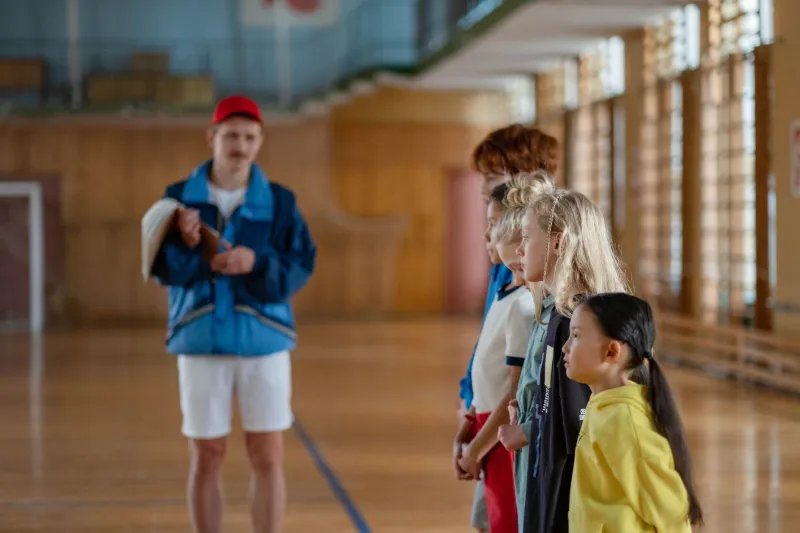
Every session has a tell. It is not the final drill, the match at the end, or the team talk. It is the first ten minutes, when a new Year 4 pupil is hovering by the sports hall door, a keen under-12 is already sprinting laps of the 3G, and a nervous parent is pretending to read the noticeboard. What happens next often decides whether that child comes back next week.
At ESCSA, we see clubs and schools doing brilliant work with very little time. So this is not a plea for elaborate planning. It is a simple case for treating the opening ten minutes as a welcome, not a sorting process. The aim is straightforward: everyone moves, nobody is eliminated, and every newcomer has a name and a job before the first proper drill begins.
Start with names, not laps
A quiet child can survive a whole session without being named. That is the problem. Before the first ball comes out, try to greet each player by name, even if you have to check a register on the clipboard. It takes ninety seconds and changes the temperature of the room.
Then give the newcomer a role. Not a patronising one, and not a permanent label. Something small and real: cone captain, timekeeper for the first activity, kit monitor for the bibs, or route checker who confirms the corners are safe. A named role gives a child a reason to speak to someone else. It also gives you a reason to check back in with them.
If you run a school club with a rotating cast, keep a simple buddy list. Pair a new player with someone who has been coming for a few weeks. The buddy does not need to be the best player. They need to be the sort who will show someone where the water fountain is.
Three formats that leave nobody on the edge
You do not need a catalogue of warm-ups. You need three you can trust when the group is mixed, the space is tight, and the weather is doing its worst.
1. Four Corners, No Out
Set four cones in the corners of the space. Call a corner and everyone moves there at their own pace. Add a ball later: walk with it, then dribble, then carry it in a different hand. There is no elimination and no race. The slowest player is still part of the picture.
For a newcomer, make them the corner caller for one round. For a keen player, ask them to demonstrate the next movement. For a nervous player, let them choose between walking and jogging. The activity is the same; the entry point is not.
2. Name and Pass
Players stand in a loose circle or scattered in a grid. One ball, one name. Call a player's name, pass to them, and they call another. After each pass, the receiver jogs to a new spot. In a small hall, use a beanbag or a soft ball and keep it to walking pace.
This is a warm-up and a roll call in one. It also shows you quickly who is comfortable calling out and who is not. Do not force the quietest child to shout. Let them point, or let a buddy call with them. The point is connection, not volume.
3. Growing Circles
Players jog or walk on their own. On a signal, they find one partner and high-five. On the next signal, pairs find another pair and link arms. Then fours become eights. Nobody is left out because nobody is chosen last; the groups grow by joining, not by selecting.
In a tight gym, use walking pace and keep the links to elbows rather than arms. On a cold pitch, keep the signals quick so no one stands still for long. A newcomer can be the signal spotter for the first round, watching for the coach's hand and calling the change.
When the hall shrinks and the pitch freezes
A school hall in November is not the same environment as a summer field. Space is tight, floors are slippery, and the noise bounces off the walls. Shorten the distances, use walking versions, and avoid activities that need long queues. Queues are where nervous players disappear into their own thoughts.
On a cold winter pitch, the enemy is standing still. Keep instructions short, start with movement rather than a static stretch, and let players keep gloves and hats on until they are properly warm. Check the surface before anyone sprints. If the ball is hard and the wind is up, use a softer ball for the opening activity and save the proper match ball for later.
The edge-of-group check
You do not need a clipboard full of questions. Use a simple sixty-second scan during the first activity. Who has not touched the ball? Who is standing just outside the circle? Who arrives last to every partner change? Who is watching the door rather than the game?
Try the name, touch, task check. By the end of the opening ten, every player should have been named by you, touched the ball or equipment at least once, and been given a small task. If one child has missed all three, that is your next job. A quiet word, a partner change, or a simple job can shift the whole session for them.
The opening ten minutes are not a filter for the talented. They are a promise that the session is designed for the people who actually turned up. Get that right, and the rest of the hour has a much better chance.