Beyond the Sign-Up Form: Making a New Family's First Visit Worth Remembering
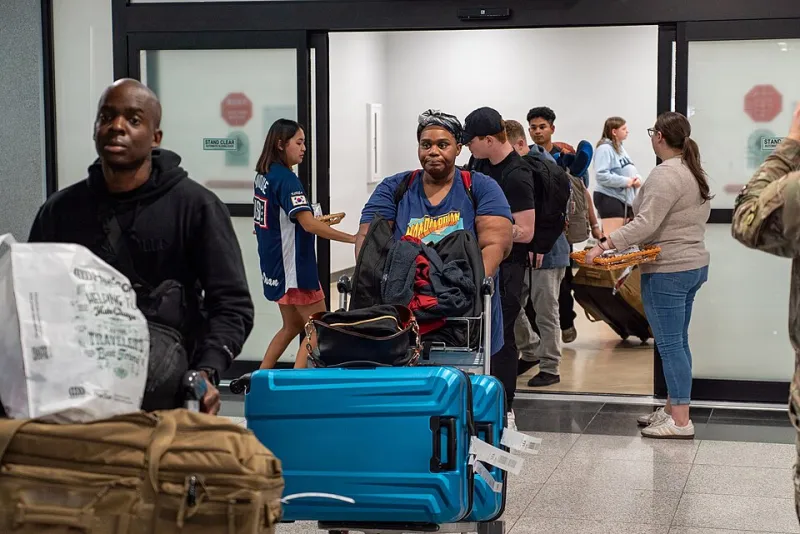
Photo: U.S. Army photo by Pfc. Sydney Shank, Public domain, via Wikimedia Commons
Ask a club secretary why families drift away and you'll usually hear about cost, or transport, or the fact that the child discovered rugby. Ask the families themselves and the answer is often smaller and more awkward: nobody really spoke to them.
That's not a criticism of volunteers who are already doing three jobs on a Sunday morning. It's simply what happens when a club has a busy pitch, a WhatsApp group and no shared idea of what a newcomer actually experiences in their first quarter of an hour.
Retention work is usually imagined as a big campaign. In practice it's a set of small, repeatable choices made in the first fifteen minutes, most of which cost nothing beyond a laminator and a bit of forethought.
Before the door: the signage test
Walk into your own club as if you've never been. Can you see where to go? Is there a name on the building? Does the car park sign point anywhere useful? Do the changing rooms say which age group is in which one this morning?
Most clubs fail this test badly, because everyone involved has known the layout for a decade. The fix is cheap: two A-boards at the entrance, one pointing to the registration table and one to the pitch, plus a chalkboard or whiteboard updated each week with the morning's fixtures. A hand-drawn arrow beats a confident assumption every time.
One useful trick: ask a new family to photograph your signage in their first week and send it over. It's a small ask and the resulting images are brutally honest.
The greeting is a job, not an accident
Somebody should be on the door specifically to welcome people. Not the coach, who is setting up cones. Not the treasurer, who is taking payments. A named person whose only task for twenty minutes is to spot unfamiliar faces and say hello.
Train the greeting, too. A genuinely useful hello includes five things:
- Your name and role — 'I'm Priya, I look after the under-11s' families.'
- Their child's name used out loud, because it's the fastest way to feel seen.
- A physical anchor — where to leave bags, where the toilets are, where to stand.
- The shape of the session — when it starts, when it ends, when the drinks break is.
- The next step — the name of their buddy and a hand pointing at them.
That exchange takes ninety seconds. It is also the single most predictive thing you can do for whether the family appears the following week.
A buddy system that isn't just on paper
Pair each new family with an existing one from the same age group for the first three sessions. Pick buddies deliberately — someone warm, reasonably settled and not already running the coffee hatch. Give them a one-line brief: say hello, sit with them, answer the small questions nobody puts in an email.
Then check in with the buddy at the end of week three. If they say 'I still haven't spoken to them properly', the pairing hasn't worked and you need to reassign, not blame.
Buddies should also be the people who pass on the unwritten rules: that the car park fills by 8:40, that the club's waterproofs live in the blue bin, that nobody minds if you bring a grandparent along.
The one-page welcome sheet
The temptation is to hand over a ten-page pack covering safeguarding, GDPR, subs and the constitution. Nobody reads it, and the worthwhile information drowns.
Aim for one side of A4. Keep it to:
- Names and photos of the two or three people to ask for help
- Session times, arrival time and what to bring
- Kit expectations — what's essential and what genuinely isn't
- The club's payment dates, in plain English
- The WhatsApp or email where questions go, and a promise about response times
- One sentence on behaviour and touchline expectations, with a link for the detail
Print it, laminate a copy for the noticeboard and email the PDF. One Dodgeball-style quick-reference beats a folder every time.
The first session itself
Make sure the new child is named by the coach, once, in the warm-up. That's the level of detail worth designing for. If a child is quietly left to work it out, they will, but they may also decide they'd rather not.
Also consider what a first session looks like for the parent standing on the touchline. If everyone around them already knows each other, the odds of them returning drop sharply. A simple standing rota of 'one existing parent, one new parent, pair up' does more for adult belonging than any welcome event.
If the club has a smaller-sided or turn-up-and-play option, give new children a session in it before full match conditions — nothing kills a first impression faster than being thrown into a game where everyone else obviously knows the drill.
The bit nobody budgets for: the follow-up
Send a short message within 48 hours. Two sentences is plenty: lovely to meet you, here's my number, any questions just shout. It takes a volunteer about four minutes per family and is consistently the difference between a one-visit and a second season.
Keep a simple log — first session date, buddy assigned, follow-up sent. Not surveillance, just memory. Clubs forget, and forgetting is read as indifference.
Your adaptable checklist
- Entrance signage: two A-boards, a weekly whiteboard, a legible car park sign
- Named greeter on the door for the first twenty minutes
- Greeting script covering name, child's name, anchors, session shape, next step
- Welcome buddy assigned per new family, with a check-in at week three
- One-page welcome sheet, printed and emailed
- New child named by the coach in the first five minutes
- Parent pairing on the touchline for the first three weeks
- Follow-up message within 48 hours
- Simple log kept, reviewed termly
None of these are expensive, none require a new committee and most can be started next weekend with a printer and a willing volunteer. Which is the whole argument really: the cheapest retention strategy you have is being expected. A family that arrives and finds the club was waiting for them will usually stay long enough to become the family waiting for the next one.