No Mud, No Meltdowns: Building a Winter Indoor Programme That Feels Like Home
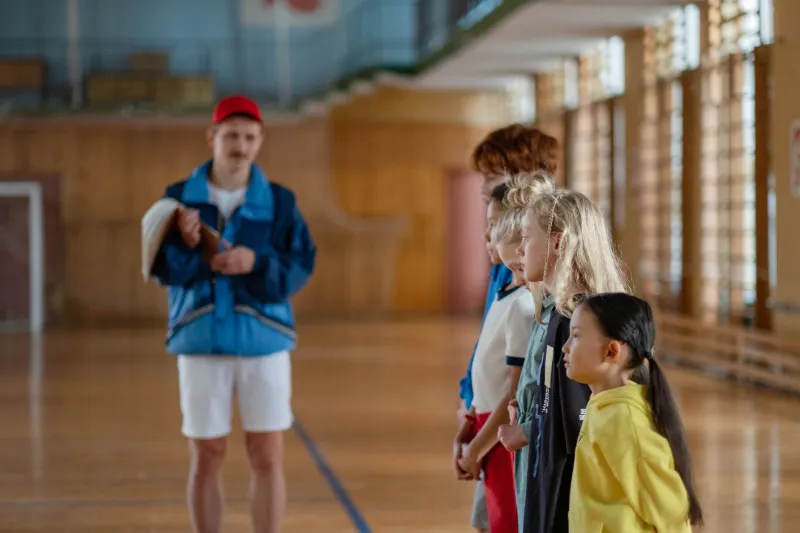
The clocks have gone back, the pitch is holding water, and the group chat is filling with variations on the same question: are we still on? Every winter, schools and community clubs across England face the same squeeze — less daylight, more cancellations and a sports hall that can feel like a grudging fallback. But it doesn’t have to. With a bit of planning, the hall becomes a proper home for winter sport: warm, bright, busy and genuinely welcoming.
This is not about pretending indoor sessions can replace a Saturday morning on grass. It’s about making them feel intentional. Families will turn out on a wet evening if the session is good, the welcome is warm and the plan is clear. Here’s how to build that programme without adding another layer of chaos to everyone’s week.
Book the hall like you mean it
Shared indoor space lives or dies on the booking rota. Start with the school calendar, not the fixture list. Exams, parents’ evenings, productions and INSET days all matter, and the caretaker usually knows the building better than anyone. Agree a block booking for the winter 2026 season, with clear start and finish times, set-up and pack-down windows, and a named contact on both sides.
Put the rota somewhere everyone can see it — a shared document, a pinboard by the door, the club newsletter. Include a buffer between sessions so one group isn’t bumping into the next. And agree the awkward stuff early: who unlocks, who locks up, which cupboards are fair game, where equipment gets stored and what happens if a booking is cancelled. A polite text to the caretaker goes a long way. So does leaving the hall exactly as you found it.
Design a session menu, not a single session
Mixed-ability indoor sport needs variety. A hall with thirty children and one ball is not a programme; it’s a queue. Try a station-based format with four simple zones: a throwing and catching area, a small-sided game, a movement or balance challenge, and a quieter skills corner. Rotate every eight to ten minutes. Keep groups small, mix ages where it’s safe to do so, and avoid elimination games that leave the same faces sitting out.
Indoor formats work well when they are quick to set up and easy to adapt. Netball-style passing, futsal, badminton, short-tennis, dodgeball variants and walking sport can all share a hall with a little thought. Have aPlan B for the child who arrives without kit, the teenager who is suddenly too cool for the warm-up, and the parent who wants to help but isn’t sure where to stand. Give every helper a job — scoring, timing, collecting bibs — and the session runs itself.
Pack a kit bag that earns its place
Indoor equipment needs to travel well and survive being stacked in a car boot. Pop-up goals, floor tape, flat cones, bibs, whistles, a decent first-aid kit and a few spare pairs of socks will cover most emergencies. Label everything. Keep a laminated checklist in the bag so nobody has to remember whether the pump made it back from the last session.
Don’t assume the school will provide what you need. Ask first, of course, but build your own small kit library so the programme isn’t dependent on a cupboard that might be locked. If your club has a kit exchange, this is the moment to raid it for spare trainers and shin pads. And keep a box for lost property — it’s amazing how many water bottles a hall can swallow in a single term.
Safeguarding starts at the door
A school hall is a public building with corridors, toilets and several ways in and out. Treat it with the same care as any other venue. Have a sign-in sheet, a clear arrival and collection point, and a named person on the door. Make sure ratios are right for the ages in the room, that coaches have the relevant checks and that everyone knows who the first-aider is.
Do a simple walk-round before the first session: sightlines, fire exits, changing areas, spectator space and the route to the toilets. Put up a short risk assessment and share it with parents so they know the plan. If spectators are welcome, give them a place to sit that isn’t in the middle of a game. Safeguarding isn’t paperwork for its own sake — it’s what lets everyone relax and enjoy the session.
The small touches that bring people back
Dark evenings make the little things matter more. A welcome table with a flask of tea, a bowl of biscuits and someone saying hello can change the mood of a whole night. Use name stickers for new families. Offer a lift-share board for parents who don’t fancy driving in the rain. Thank the caretaker publicly, and thank the volunteers who turn up early to move benches.
Ask for feedback in the simplest way possible: three questions on a clipboard, a quick chat at the door, a short form in the group chat. Then act on it. If families say the start time is too tight, move it. If the younger group needs a shorter session, try it. The aim is a programme that people choose, not one they endure until spring.
Make the indoor season feel deliberate
A winter programme works best when it is planned as a season, not a series of favours. Set a start and end date, publish the rota, train your helpers, review halfway through and celebrate at the end. Indoor sport gives schools and clubs a chance to mix ages, try new formats and keep everyone moving when the weather turns. Done well, the hall isn’t Plan B at all. It’s a warm, noisy, welcoming home for the club — and the reason families come back when the nights draw in.