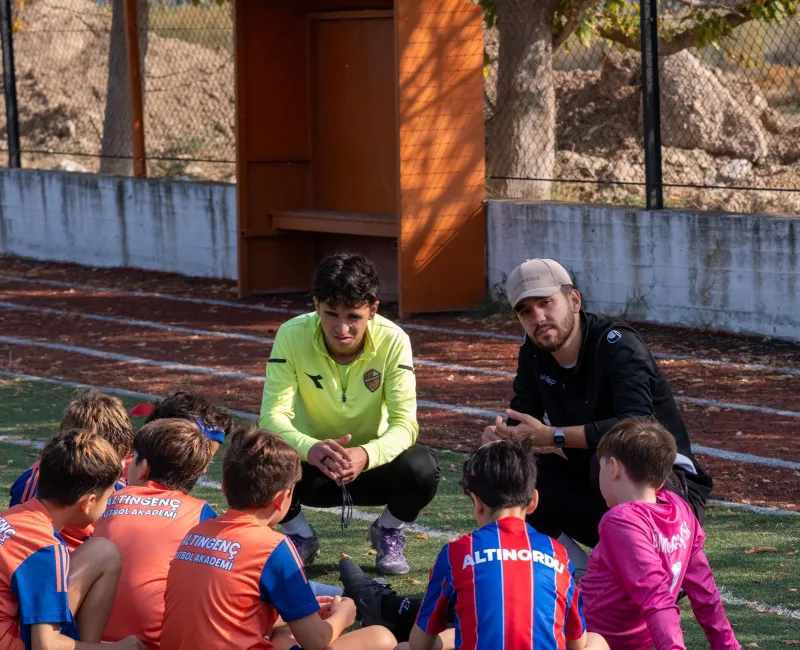
Never Kicked a Ball? The Touchline Still Has a Job With Your Name On It

Every club has them: the same three people setting up goals, making tea, chasing the referee and packing away the nets while everyone else watches from a camping chair. It is not that the other families do not care. More often, they are waiting to be asked for something they actually feel able to do. Ask a parent who has never played to run the warm-up and you will usually get a polite no. Ask them to run the welcome desk for 45 minutes and you have a volunteer.
As the winter fixtures pile up, clubs need more hands than ever. But the answer is not to turn every parent into an assistant coach. It is to make the club's off-pitch work visible, specific and short. A club that makes room for non-sporting skills keeps more families, fills more gaps and takes the pressure off the same three people every week.
The same three people are not a succession plan
There is a particular kind of club exhaustion that comes from relying on the same volunteers season after season. It works until it doesn't: someone moves house, changes jobs, has a baby, gets injured or simply needs a break. Then a whole matchday operation wobbles because nobody else knows where the respect barriers live.
Non-playing parents are an underused resource. They can be brilliant organisers, calm welcomers, reliable timekeepers and ruthless kit-washers. What they often lack is not willingness but confidence. They hear 'we need help' and assume it means 'we need someone who knows the game'. Most of the time, it does not.
What a good role card looks like
The simplest way to turn goodwill into help is a one-page role card. Keep it to a single side of A4 and include six things: the purpose of the role, when it happens, how long it takes, what to do first, who to ask for help, and what you will not be asked to do. That last line matters. It gives people permission to help without feeling exposed.
A good role card also names the club's safeguarding lead and says clearly that anyone with a concern should pass it on rather than investigate it. Nobody should be left holding a whistle, a first-aid kit or a safeguarding issue without proper training. Low-barrier does not mean unsupported.
Ten jobs that need no sporting CV
-
Timekeeper. Sit with a stopwatch, note substitutions and keep the coach informed of the time. Time commitment: 60 to 90 minutes on matchday. No offside knowledge required. The role card should explain which half-length the league uses and who confirms the final score.
-
Welcome desk. Greet families, point people to the right pitch, sign in visitors and keep the first-aid bag visible. Time commitment: 45 minutes before kick-off. This is the role that turns a nervous new family into a returning one.
-
Kit wash rota. Collect a named kit bag on Monday, wash and return it by Thursday. Time commitment: two loads a week during the season. Pair it with a simple checklist so nobody has to remember which socks belong to which team.
-
Car park marshal. Wear a hi-vis, keep the access route clear and help people park without blocking residents' driveways. Time commitment: 30 minutes before and 20 minutes after. The role card should say clearly that marshals are not directing traffic on the public highway.
-
Consented photography. Take team photos and matchday snaps only where the club has recorded consent, never publish without approval, and follow the club's safeguarding policy. Time commitment: one match a month. This suits someone who enjoys taking pictures but does not want to coach.
-
Scoreboard and result recorder. Update the board, record the final score and send it to the league using the club's template. Time commitment: 90 minutes. The card should say: record the result, do not debate it.
-
Tea urn and refreshments. Set up the urn, lay out squash and biscuits, collect donations and leave the area tidy. Time commitment: one hour. It sounds small, but a warm drink on a cold touchline is often the difference between a club that feels welcoming and one that feels closed.
-
Equipment check. Count bibs, balls, cones and nets, report damage and flag anything missing. Time commitment: 45 minutes midweek. No technical knowledge needed, just a clipboard and a bit of patience.
-
Matchday setup and packdown. Put up nets, respect barriers and bins, then pack them away with a partner. Time commitment: 45 minutes before and after. Always pair this role with someone experienced for the first month.
-
Travel buddy and lift coordinator. Help coordinate away-day lifts through the club's approved channels, share meeting times and make sure nobody is left without a plan. Time commitment: 20 minutes before an away match. The role card should be clear that the coordinator is not a taxi service and that all travel arrangements follow club policy.
Make it easy to say yes
A role card is only useful if people can find it. Put the cards on the club website, pin them to the noticeboard and mention two or three of them at the next parents' evening. Better still, ask people which one they would prefer rather than asking whether they can help. Choice lowers the barrier.
It also helps to show the time commitment in plain terms: 'one hour, once a month' is easier to agree to than 'support with matchday operations'. And rotate the roles. A parent who washes kit in October might be happy to run the welcome desk in February, but not both every week.
The point is not filling gaps
The point is building a club where more people can belong. Some parents will never want to coach, referee or run the line. That is fine. They can still be the reason a new family feels welcome, the reason the nets are up before the first player arrives, or the reason the tea is hot when the second half starts.
So next time you hear 'I don't really know the game', do not hear a no. Hear an opening. Hand them a one-page role card and say: 'That's fine — this job doesn't need you to know the offside rule. It needs you for an hour.'